
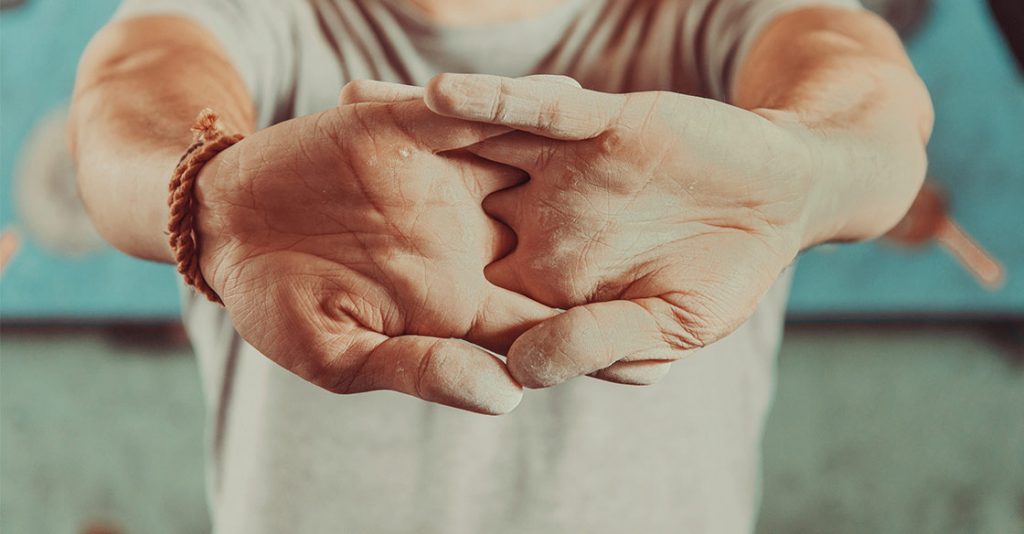
Tips on Warming Up for Climbing
Warming Up: an often overlooked part of a climbing session. But we are all guilty at times of skipping this important step, whether it’s because we’re short on time or just too psyched to climb.
To be sure, the culture around climbing is changing. More attention is being paid to rock climbing as an athletic pursuit, akin to gymnastics, cross-fit, and weight-lifting, which is why there is an increase in interest and information around all things training for climbing. This is gr

eat because rock climbing is indeed a physical work out, and it is well known that one should warm up before working out.
Warming up before you climb contributes to the prevention of long-term, chronic injuries as well as immediate injury. It can also help your immediate climbing performance. Below are four broad guidelines and exercise suggestions to try out at the start of your next climbing session. The pre-climbing routine need not take more than 15 minutes.
Get Moving: The goal is to improve your blood circulation and raise your body temperature – literally warming you up. Options: Do 2-4 minutes of skipping with a rope, jumping jacks, jogging on the spot and/or marching in place
Get Loose: The goal is to loosen up the joints, which for many of us are tight from sitting at a desk, through dynamic (but controlled) exercises.
Options:
Leg swings (10 per leg, try to keep hips square, swing legs front and back, side to side)
Hip circles (hands on hips, draw big Os with your hips, 5 each direction); Or use a hula hoop for fun
Ankle and wrist rotations (5 each direction)
Shoulder rolls (5x backwards and forwards)
Get (a little) Pumped: The goal is to activate (without over-tiring) relevant muscle groups.
Options:
For the arms: This “flashing light” exercise is great, especially for the forearms: Open and close your hands (making “flashing lights”) 20 times with arms stretched straight above your head, with arms stretched out to the sides at 90 degrees to your body (making a t shape), and with arms outstretched in front of you.
For the legs: 10 squats, box steps

Get Climbing: Yay! Start with problems or routes that are easy for you and, taking proper rests, work your way up to your projects.
“Using various boulder problems on as many angles and hold types as possible:
* Do as many easy 6a / 6a+ problems as it takes to add up to your limit grade. For example, if you are climbing 7a for your limit problem, you might do 6a/6a/6b/6b These should be slow and in control.
* Finish with some specific hold positions on the hangboard if necessary, depending on the nature of your work problems.

Add Comment